Why We Invested in Haiqu: Software for practical quantum, today
Haiqu announces their $11M seed round to build the software infrastructure enabling quantum advantage today.


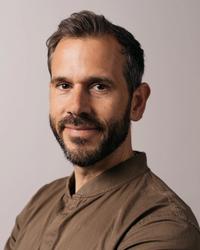


Richard Givhan, CEO and co-founder of Haiqu, is a founder who makes you question industry assumptions. Most VCs dismiss quantum, while semi-informed VCs offer predictable quasi-technical explanations as to why we’re “decades away”. But builders like Richard use first-principles and technical depth to plot a course that will upend convention. “What PyTorch did for AI, Haiqu will do for quantum,” he said, pointing to results whereby engineers were deploying today’s powerful algorithms on quantum computers with Haiqu. It’s the kind of progress the industry has been waiting for.
And it's picking up momentum. Last year marked a breakout year for quantum investments – over $11.6B was invested across public and private quantum companies, compared to only $2.4B the year prior and only $1B the year before that! From venture, quantum saw $4.5B in the last three years vs. $4B total in the 15 years prior.
The market is starting to believe. Quantum computing presents extraordinary, human civilization trajectory changing opportunities. Our world is, in part, governed by quantum dynamics that only quantum computers can reveal. This could unlock hard-to-fathom breakthroughs in areas like energy production and drug discovery. More practically, quantum computing could transform finance and insurance and upend encryption as we know it.
Despite investment and boundless potential, we have not yet reached “quantum advantage” – when a quantum computer can solve a problem faster and more efficiently than a classical computer, though there is debate about whether this must occur on a practical problem. When quantum advantage is reached, and quantum computers are performing economically valuable, practical problems better than classical computers, there will be a deluge of attention on quantum, dwarfing the past two years.
So how do we get quantum advantage? The existing state of deploying applications on quantum computers is challenged – expensive, hard-to-access computers that require experienced teams writing bespoke, non-standardized algorithms. Quantum teams need the right software and frameworks to deploy algorithms on today’s hardware, not waiting another decade. Haiqu provides circuit compression and error shielding software within easy to use frameworks that let teams focus on solving problems instead of wrestling with hardware. With Haiqu, teams can run applications at greater scale and with dramatically fewer computational steps on today’s early, error-prone quantum hardware.
Richard Givhan, CEO and co-founder of Haiqu, has long been captivated by quantum computing’s potential to tackle the world’s toughest problems. After growing up in Cyprus and studying applied physics at Stanford, he joined Creative Destruction Labs, where he teamed up with co-founder Mykola Maksymenko, a former quantum researcher at Max Planck Society and Weizmann Institute, to start Haiqu.
We are thrilled to announce Haiqu’s $11M seed round. We were fortunate to lead the round, with participation from Qudit Investments, Alumni Ventures, Collaborative Fund, Silicon Roundabout Ventures, Angel One Fund, and returning investors Toyota Ventures and Mac Venture Capital. We’re proud to back Richard, Mykola, and the entire Haiqu team in their bold endeavor to enable their customers to reach quantum advantage across every vertical.